BMW R 1150 GS
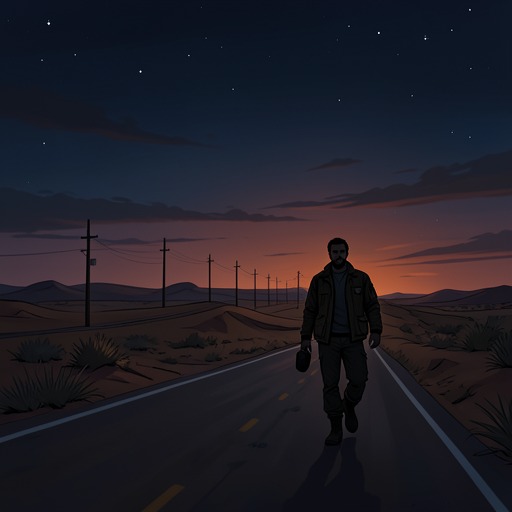
Heart of the HunterThe BMW R 1150 GS is the motorcycle Thobela Mpayipheli takes from a Cape Town showroom when he must leave quickly with a bag entrusted to him. It becomes both his means of escape and the most visible marker in the national search for him: a large BMW on the N1, powerful enough to outrun ordinary traffic but difficult to conceal from helicopters and police. Mpayipheli’s changing command of the machine turns the flight into a practical test of skill, judgment and adaptation.
Selection and theft
Before taking the GS, Mpayipheli has only ridden a Honda 200 and has never been allowed to ride the large showroom motorcycles. His work at the garage has been to push them outside, wash and polish them, and return them to the display. Now, after the car he expected to use is gone, he returns to the premises and enters with the silver key he keeps in his wallet. Because he usually opens the garage in the morning, he knows the alarm code as well as the building’s routine. He chooses not to turn on the lights, wary of drawing attention, and must decide which motorcycle can carry his bag and take him onward.
The fastest option, the 1200 RS, offers little apparent help with luggage; the LT has room to pack but is enormous. The GS demonstration model is a more workable choice: its fixed baggage cases flank the rear wheel, and its key hangs in the spares room. Its orangey-yellow color and substantial build make it unmistakable, but the cases give Mpayipheli a way to carry what he needs. He takes the demonstration model, along with a suit, helmet and gloves, and leaves money in the desk drawer. In a note to Mr Bodenstein, he says he is borrowing the bike for two or three days, explains that he urgently needs to help a friend, and promises to pay for wear, tear and any damage. The note records an effort to accept responsibility even as the unapproved departure places the machine at the center of his escape.
Learning to ride under pressure
The GS’s power initially exceeds Mpayipheli’s expectations. As he turns onto Oswald Pirow and opens the throttle, its response nearly throws him off. The bike feels massive, high and difficult to manage beside the small Honda Benly he knows. At the traffic lights near the N1, he nearly loses control again when he brakes and the anti-lock braking system engages. Once moving, however, he begins to find the balance: the wide handlebars and large tank still feel unfamiliar, and he stays in the left lane, moving more slowly than the freeway traffic while he learns the machine.
The contrast between the motorcycle and his earlier experience is captured in its acceleration. Before he is properly into third gear, the GS reaches 100 kilometres per hour, roughly the Honda’s top speed. The machine’s power is at first a hazard he must restrain rather than an advantage he can confidently use. Beyond Touws River, he assesses the route and the fuel gauge: he needs to refuel at Laingsburg, then cross a long stretch through the Great Karoo to Beaufort West. From there, he estimates another 500 or 550 kilometres to Bloemfontein, where he hopes to rest in a Black township during daylight. The motorcycle’s range, the intervals between fuel stops and the need to avoid being found shape his choices as much as the road itself.
Just before the Hex River valley, that relationship changes. Mpayipheli comes out of a bend, opens the throttle and begins to enjoy the GS’s power. He selects a line through the curve, leans with the machine and accelerates out with greater control. The riding instruction he received at the Advanced Riding School starts to make sense in practice. He notices traffic and hazards ahead, works the clutch, gears and accelerator, and passes a lorry. A succession of controlled actions replaces the earlier struggle to keep the motorcycle upright. For a time, the road ahead seems open and the difficulty of mastering the GS has become a small but consequential victory.
The conspicuous vehicle in the manhunt
The motorcycle’s visibility makes it an asset and a liability. An intelligence alert sent to police and traffic authorities along the N1 describes a Xhosa man on a big BMW motorcycle; the Cape Times turns the same identifying details into a more attention-catching account of a big, bad biker. The GS is easy for pursuers to recognize, and its yellow color is reported when a helicopter spots Mpayipheli travelling at about 200 kilometres per hour, thirty kilometres outside Beaufort West. The news of the chase reaches the operations room, where the interception is confirmed and the helicopter is instructed to follow without making contact.
Mpayipheli pushes the bike towards Three Sisters, trying to get ahead of the response to his flight. When he hears the helicopters, the speed and power that have begun to serve him cannot guarantee escape: the aircraft are faster and remain above and behind him. He rides into a bank of rain. As the downpour reduces visibility, he slows, follows a lorry through the difficult conditions and waits until the helicopter noise fades. The weather, rather than a contest of speed, breaks the pursuers’ immediate hold on him.
On a muddy section of road, the GS’s weight and momentum become dangerous again. The front wheel loses grip as Mpayipheli reaches a sudden turn; the motorcycle slides, and the encounter with the nearby soldiers becomes chaotic. The sequence reverses the earlier image of control in the Hex River valley: the same machine that responded to his practiced turns now behaves unpredictably on a surface that will not hold it. Later, during another pursuit near a bridge, he rides down a steep bank and then drives the GS back up through grass and bushes to conceal it beneath the concrete. The stands cannot hold it on the uneven ground, so he lays it on its side. The motorcycle, conspicuous on the open road, is now hidden by its awkward position and the bridge’s deep shadow.
Concealment, recovery and onward flight
The bridge shelters Mpayipheli but costs him time. While he remains hidden, the GS cannot carry him towards Lusaka; he is concerned about the hours lost, the borders still ahead and the difficulty of crossing the Zambezi River. By daylight, the shadow will no longer provide the same protection. The motorcycle’s role in the chase is therefore not simply to provide speed: its need for space, fuel and concealment continually determines where Mpayipheli can wait and when he can move.
After the encounter at the bridge, a burst of gunfire strikes Mpayipheli, and he later hides in the back of a Chevrolet El Camino with the GS lying on its side beside furniture, suitcases and a carton of mutton under a dirty canvas cover. The baggage cases have been removed, and the cramped load contrasts sharply with the open road for which the motorcycle was designed. During the journey, Mpayipheli reflects on his decision to control an impulse rather than act on it. The vehicle travels with him while he is being transported, but it cannot solve the immediate problem of being exposed or keep the timetable he had planned.
When he sets out again, he puts the bag in a side case, pulls on his gloves and starts the GS. It hesitates before catching. He lets the engine warm, shifts through the gears and accelerates to 140 kilometres per hour. The return to riding is also a return to a competence he has had to build during the journey. At 15:06, he calculates a route through Petrusburg and onward by lesser roads, hoping to cross the border before midnight; he still has to pass Petrusville and the Orange River. The motorcycle again offers speed and mobility, but not certainty.
Later, the GS is loaded into an Oryx transport helicopter. After the aircraft lands near a road sign confirming that it has crossed the border, Mpayipheli struggles to get the heavy bike down and must start it before riding out. The engine turns without starting until he raises the choke and tries again. He then accelerates from the helicopter’s half-metre drop rather than risk a slow departure. The front and rear wheels hit the road in succession; he steadies the motorcycle, brakes before reaching the veld, and rides away. He has forgotten a submachine pistol inside the aircraft, but keeps moving, accelerating to 160 kilometres per hour and out of range. The GS carries him onward even after the helicopter has become both transport and temporary confinement.
Narrative significance
The BMW R 1150 GS is more than a vehicle assigned to a chase. Its physical demands repeatedly expose the gap between Mpayipheli’s intention and his actual control: the powerful throttle nearly unseats him at the start, the brakes unsettle him, mud defeats his grip, and the bike must be laid down beneath a bridge. Yet experience accumulates. He learns to read corners, manage the gears and use speed selectively; after being carried under a tarpaulin, he mounts again and resumes planning a route across the region.
The motorcycle also turns movement into a contest between personal improvisation and organized surveillance. Roads, fuel stops, storms, bridges and border crossings offer changing opportunities, while the distinctive yellow BMW lets authorities track the fugitive from the air and through news reports. At a hotel, Mpayipheli sees his motorcycle’s photograph on television and learns that the story has expanded to include the reported disappearance of his common-law wife and her son. The bike has become not only his transport but the public image through which strangers identify his flight. Its continuing presence in the story joins practical escape to the cost of being made visible: the GS gives Mpayipheli a way forward, but every mile also gives the pursuit another chance to find him.